Swim with Humpback Whales: Photographing Whales Underwater

The chance to swim with humpback whales in the open ocean is truly an unforgettable experience. Add underwater photography to the mix, and you’ve got the recipe for some of the most unforgettable images of your life.
But capturing powerful, respectful, and beautiful shots of these massive marine mammals takes more than a GoPro and good luck. Whether you’re a seasoned shooter or just getting started, here’s everything you need to know before bringing your camera on a humpback whale swim.
🐋 Where to Swim with Humpback Whales
Check out my post on where to swim with humpback whales.
📸 What Gear You’ll Need
Check on my guide to underwater photography here. When it comes to whales here are a few additional tips:
🔍 Lenses: Wide-angle or fisheye lenses are best (16–35mm or 8–15mm): Whales are huge and often close—wide lenses help capture their full form and environment
💡 Lighting: Natural light is your friend. We don’t strobe the whales.
🛠️ Settings for Success
Here’s a simple manual setup to start with:
- ISO: I cap ISO at 400 or 800/1000 (adjust for light conditions)
- Aperture: f/8–f/11 for depth of field
- Shutter Speed: At least 1/250 sec to freeze motion, up to 1/500 can be preferable, but keep your aperture in mind when adjusting
- White Balance: Custom or underwater preset
🌊 Tip: Shoot in RAW for easier editing later, especially when correcting for blue/green tones.
🐳 Composing the Shot
Photographing whales isn’t just about technical skill—it’s about presence and patience. Here’s how to capture their magic:
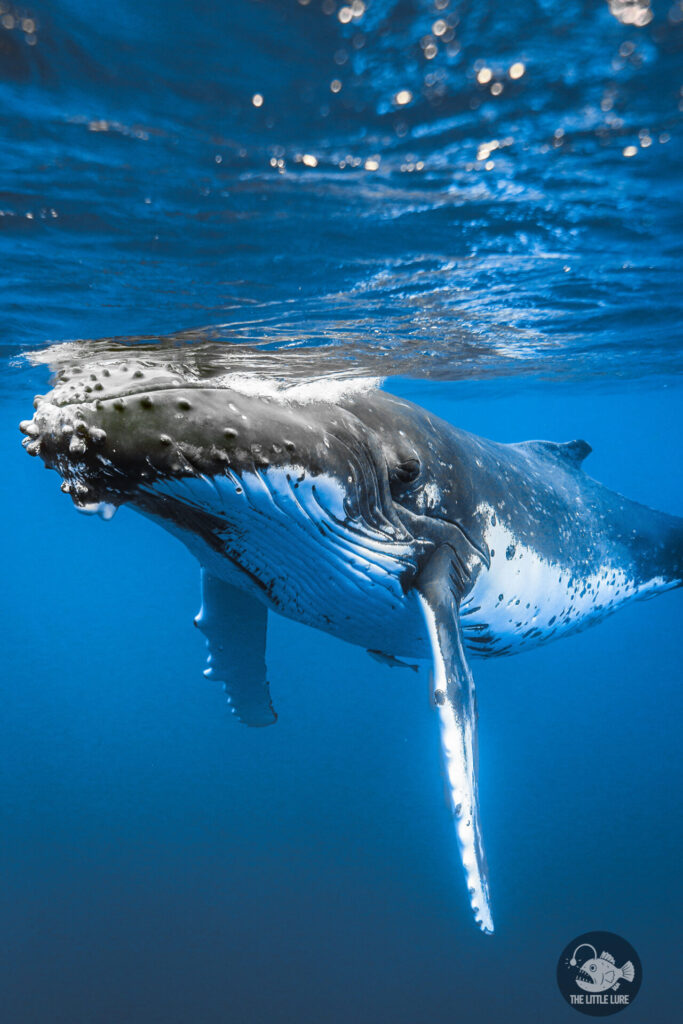
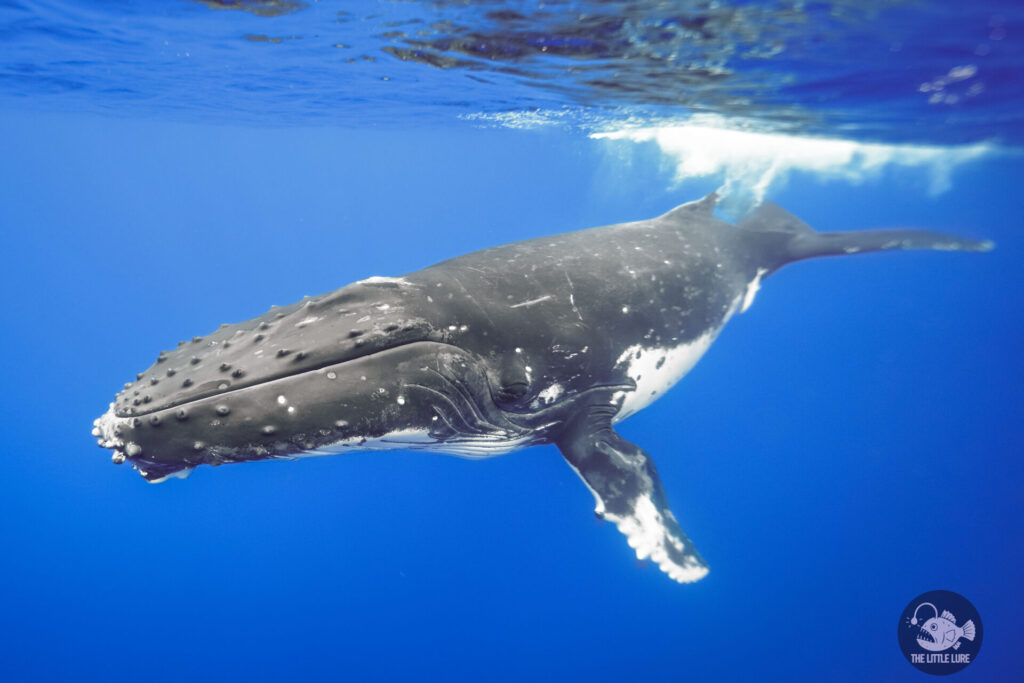
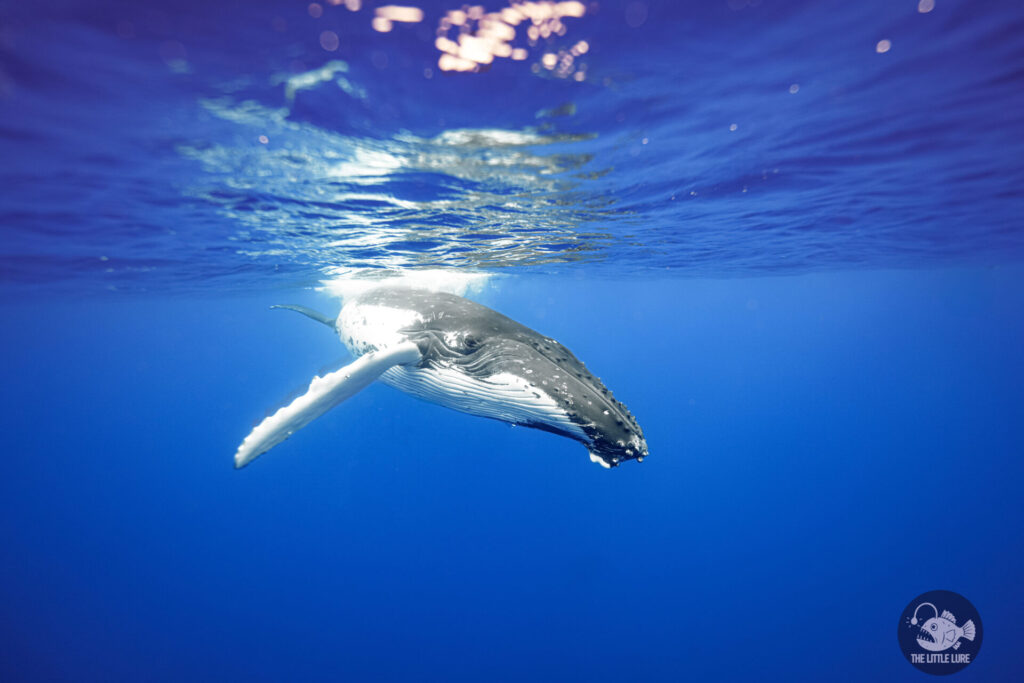
- Use Negative Space: Frame your whale against open blue for dramatic contrast
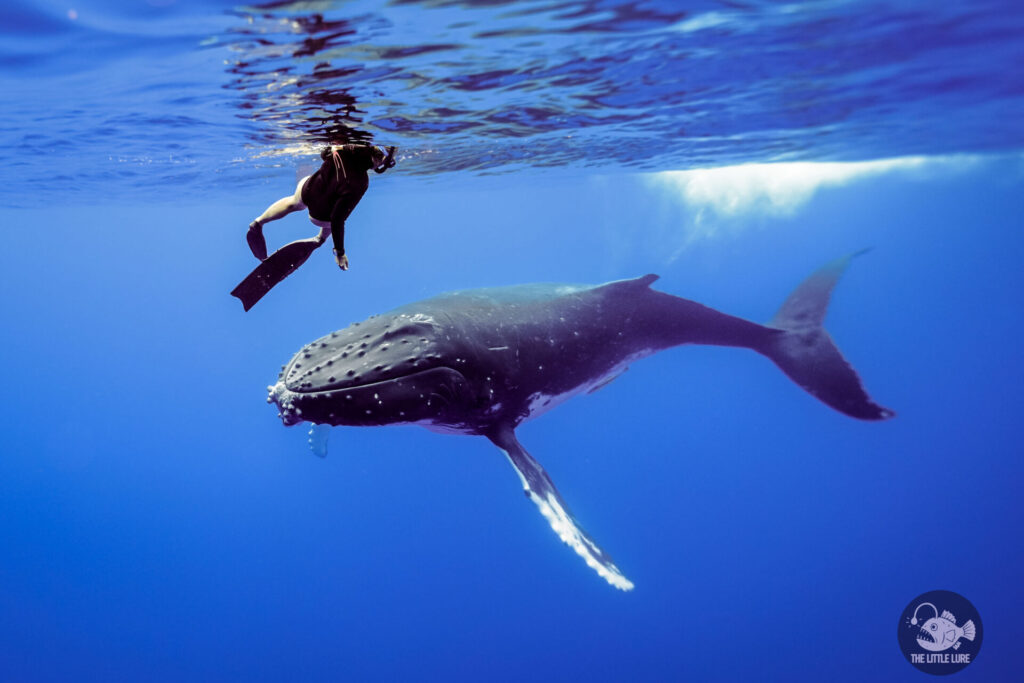
- Include a Diver for Scale: If you’re not solo, a diver in the frame helps highlight just how massive these animals are
- Remain Calm: If the whale swims directly towards you, remain calm. Whales have pretty good special awareness but be prepared to swim backwards to give yourself more space.
🌱 Ethical Photography: Respecting the Whale Comes First
If you’re lucky enough to swim with humpback whales, remember: the shot is never more important than the animal.
- Never chase, touch, or dive down aggressively
- Follow your guide’s instructions—many work under permits that rely on good guest behavior
- Prioritize calm, predictable movement to avoid stressing the whales
🐋 The best encounters happen when the whale chooses to interact. Be still, stay calm, and wait. That’s when the magic happens.
Photographing humpbacks underwater is about more than just getting the perfect shot. It’s about connection—with nature, with your own breath, and with the ancient rhythm of these magnificent creatures.
If you’re planning a trip to swim with humpback whales, give yourself time to get comfortable in the water first, respect the animals, and let your camera tell a story that’s as wild and wonderful as the moment itself.