How to Nail Whale Shark Photography
Whale shark photography isn’t for the faint of heart! I’ve been lucky enough to swim with whale sharks across the globe—from La Paz to the Maldives—and I’ve photographed these massive, majestic creatures in all kinds of conditions. If you’re planning a trip and want to come home with the shots of your dreams, you’re in the right place.
Here’s what I’ve learned through experience (and a few humbling misses) about whale shark photography—from camera gear to positioning, to what to expect when you’re paddling alongside a 30-foot fish.
Before You Get in the Water
A few important things to know before your fins hit the surface:
Whale Sharks Are Big. And Fast.
They glide beautifully—but when you’re trying to swim with a camera housing, keep your snorkel in place, and line up a shot, they somehow feel like they’re going 90 mph. Most whale shark photography happens while snorkeling, so you’ll need to be ready to move efficiently in open water. The whale shark will look like it’s barely swimming and will zoom right on by you, so keep snapping!
You Might Only Get One Chance
In many regulated areas, you’re only allowed a few passes in the water per shark. And in places like La Paz and Donsol, your time in the water is strictly limited. Translation? You’ll often have one shot—literally.
Talk to Your Operator
If getting great images is a priority, let your tour operator know when you book and ASK QUESTIONS. In Isla Mujeres, you have to wear a life jacket while you swim; in Hanifaru Bay, there’s no diving, only snorkeling; in La Paz, they only have juveniles. Ask questions before you book. Even though you’ve seen pictures on instagram of someone doing XY or Z it doesn’t mean that that’s within the regulations or that your operator will permit it.
Gear for Whale Shark Photography
Go Wide or Go Home
Whale sharks are huge. If you want to fit one in the frame, especially when they get close, you’ll need a wide-angle lens. I recommend:
- 14–24mm for DSLRs or mirrorless setups; I shoot on a 14mm prime.
- Dome ports for housing if you’re shooting underwater stills
- RAW format to give you more flexibility in post-processing
Using a GoPro?
You can still get amazing shots! Try these tips:
- Make sure it’s set to 4K (or whatever the highest K is) and 60 FPS
- Set it to wide angle
- Keep it steady and close to the water line for smoother clips
- If you are snorkeling, make sure you hold it under the water.
Whale Shark Photography Tips
1. Position Is Everything but don’t give up
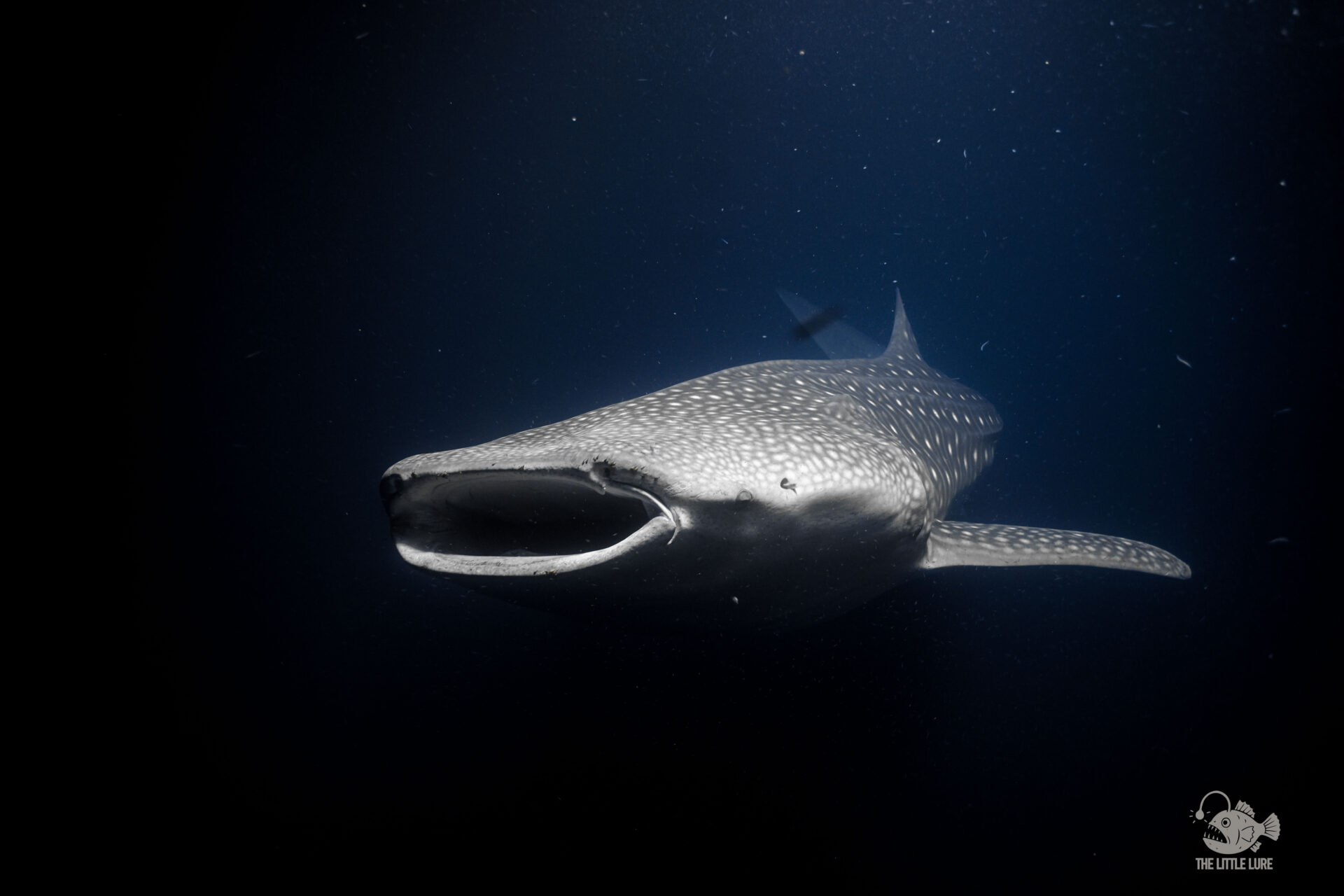
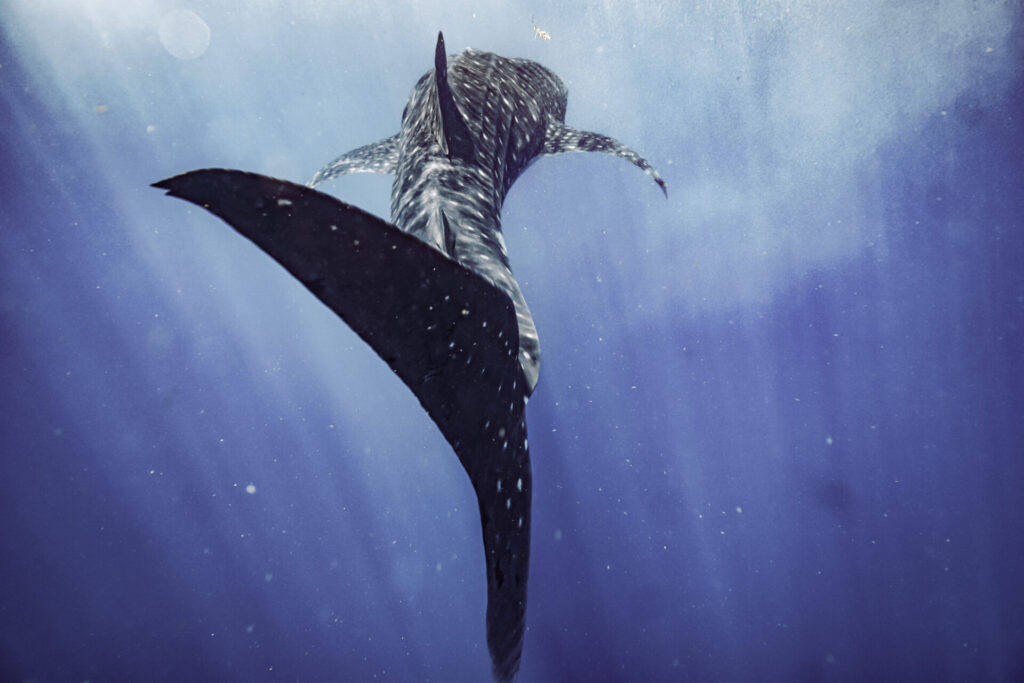
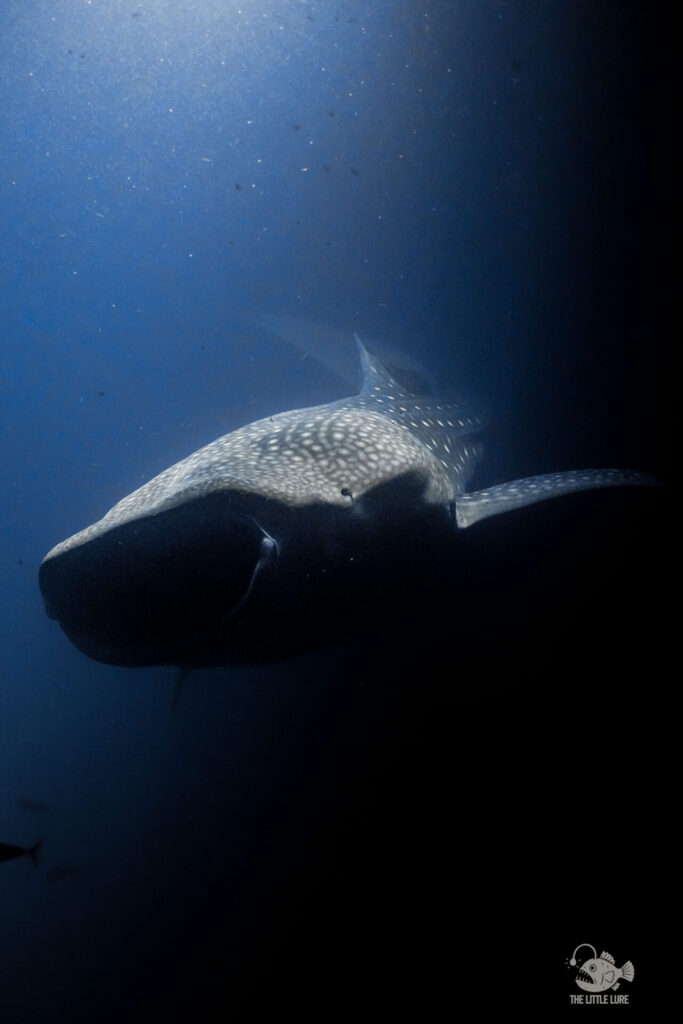
Ideally, you start out in front of the shark, getting photos of its head, and you can continue shooting as it swims by you (but also keep swimming!). At the end you can get some nice tail shots. Always keep shooting! It will be impossible to tell what’s in focus and whether you’ve cut off a fin with everything happening in the water.
2. Focus Fast
Set your camera to continuous autofocus and keep your shutter speed fast—1/500 or higher. Many potentially perfect photos are ruined by a misplaced focal point or blur from quick movements.
3. Think Creatively
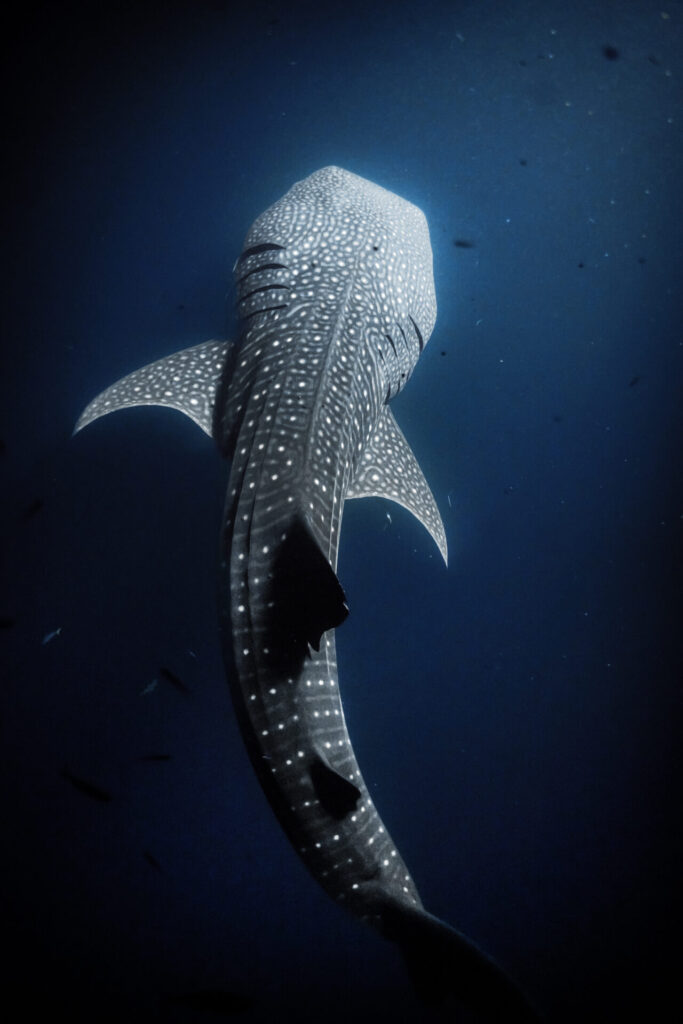
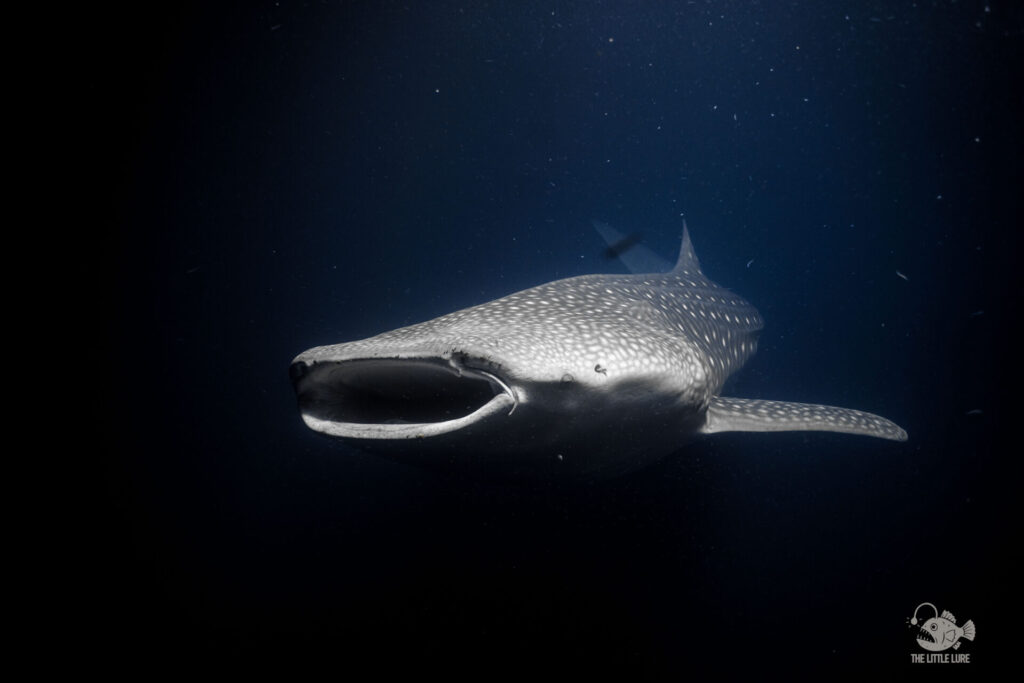
Don’t just aim for the classic head-on shot (although those are epic). Play with composition and try:
- 🐋 Side Profiles – Clean, classic, and always striking
- 💫 Silhouettes – Minimalist magic with a bit of drama
- 📐 Perspective Shots – Include a swimmer for scale
- 🎯 Detail Shots – Eyes, spots, and gill slits up close
- 🌊 Split Shots – Half-above, half-below waterline if you’ve got a dome port
Ethics in Whale Shark Photography
As tempting as it is to get close, the best whale shark photography is respectful. These animals are gentle, but they’re still wild, and we’re guests in their home.
- Don’t touch, chase, or crowd them
- Stay 3–4 meters from the body and 5 meters from the tail
- Never block their path
- Follow all local rules and time limits
Better Lucky Than Good
Whale shark photography isn’t always easy. Some days you’ll get the perfect lighting and a curious shark who circles back for a second pass. Other days, you’ll be treading water with fogged-up goggles while the shark speeds into the blue.
But that’s part of the magic. You’re out in open ocean with one of the largest and most mysterious animals on Earth. If you get the shot? Amazing. If not? You still shared the water with a living, swimming constellation—and that’s always worth it.